





Why India is a Global Leader in Brass Home Decor Manufacturing
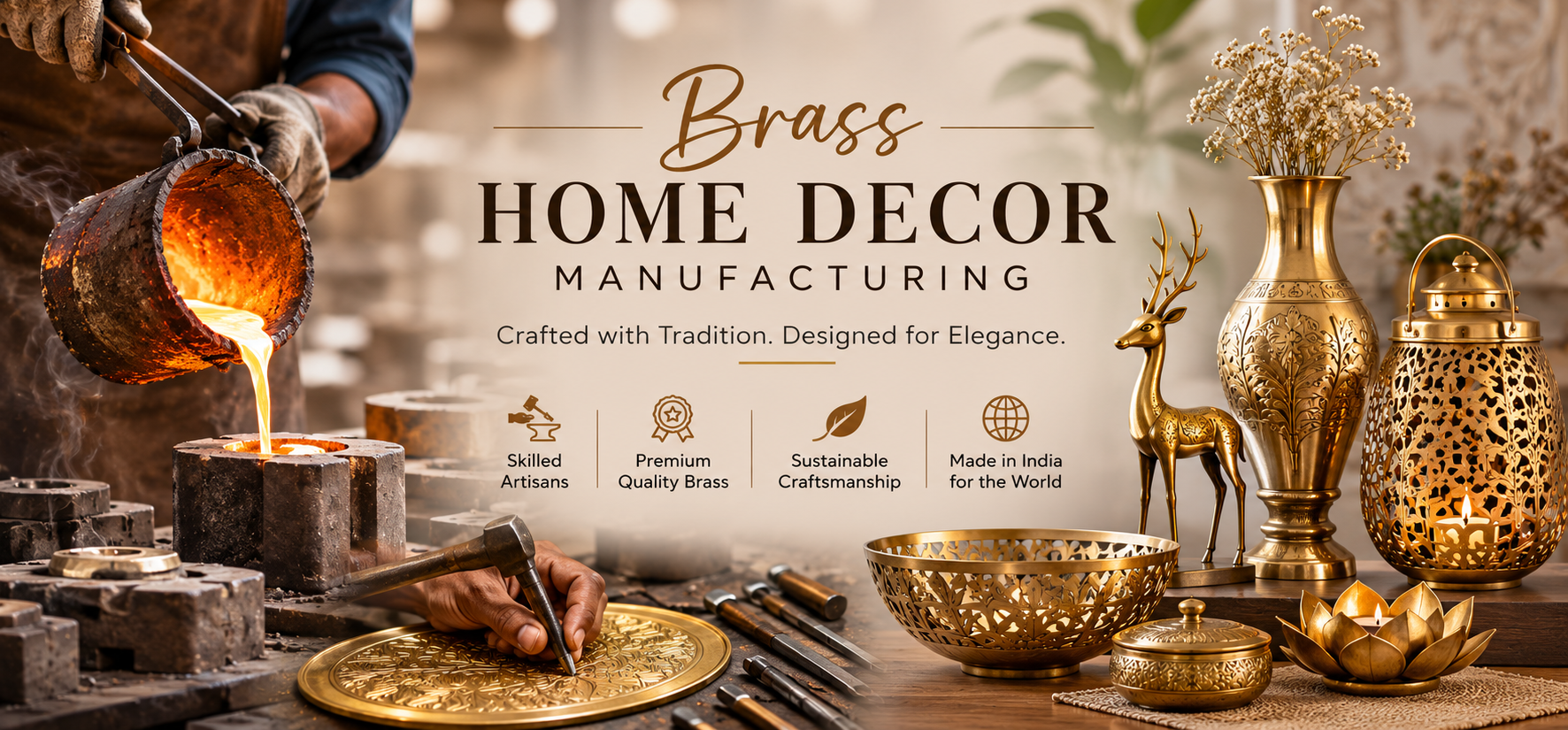
India has been recognized for brass craftsmanship for centuries. The country's rich heritage, highly skilled artisans, abundant manufacturing expertise, and growing export infrastructure make it one of the preferred sourcing destinations for brass home decor products worldwide.
Today, Indian manufacturers supply brass home decor to importers, wholesalers, retailers, hotel suppliers, interior designers, furniture brands, and online marketplaces across North America, Europe, the Middle East, Australia, and many other international markets.
Unlike mass-produced decorative items, Indian brass products often combine handcrafted artistry with precision manufacturing. This combination allows businesses to offer unique products while maintaining consistent quality for large-scale wholesale orders.
Major advantages of sourcing brass home decor from India include:
- Experienced brass artisans
- Competitive manufacturing costs
- Large-scale production capacity
- Premium raw materials
- OEM and private label services
- Custom product development
- Reliable export capabilities
- International quality standards
- Flexible MOQ options
- Strong global logistics network
For international buyers, these advantages translate into better product quality, attractive pricing, and dependable long-term supply.
Understanding Brass as a Raw Material
Before discussing how brass home decor is manufactured in India, it is important to understand why brass is one of the most preferred materials for decorative products.
Brass is an alloy primarily made from copper and zinc. By adjusting the proportion of these metals, manufacturers can achieve different levels of strength, color, durability, and workability depending on the product's intended application.
Brass offers several advantages for home decor manufacturing:
Excellent Durability
Brass maintains its strength for many years without losing structural integrity, making it ideal for decorative products that require long service life.
Elegant Appearance
Its natural golden finish provides a premium look suitable for luxury interiors, hotels, offices, restaurants, and residential spaces.
Corrosion Resistance
Unlike many other metals, brass resists corrosion effectively, making it suitable for various indoor decorative applications.
High Workability
Brass can be cast, engraved, polished, textured, etched, or handcrafted into highly detailed decorative products.
Sustainable Material
Brass is recyclable, making it an environmentally responsible choice for modern manufacturers and global buyers seeking sustainable sourcing options.
Step 1: Product Design and Development
Every brass home decor product begins with design.
Manufacturers work closely with wholesalers, importers, retailers, and private-label brands to develop products that match current market trends and customer preferences.
The design process typically includes:
- Market research
- Product concept development
- CAD drawings
- Prototype creation
- Size selection
- Weight calculation
- Surface finish planning
- Packaging requirements
- Branding specifications
Many international buyers also request OEM manufacturing where products are developed exclusively for their brand.
This stage is particularly important because it ensures production efficiency while minimizing manufacturing errors during bulk production.
Step 2: Selection of Premium Brass Raw Material
The quality of any brass home decor product depends heavily on the raw material used.
Reputable Indian manufacturers carefully source premium-grade brass from certified suppliers to ensure consistent composition, strength, and finishing quality.
During raw material inspection, manufacturers evaluate:
- Brass purity
- Alloy composition
- Material strength
- Surface quality
- Chemical composition
- Manufacturing suitability
Using high-quality raw materials helps reduce defects during casting and improves the durability of the finished product.
Premium brass also delivers superior polishing results, which is essential for luxury home decor collections.
Step 3: Brass Casting Process
Once the raw material is approved, manufacturing begins with the casting process.
The casting technique depends on the product's complexity, size, and design.
Common manufacturing methods include:
Sand Casting
Sand casting is widely used for larger decorative products with intricate details.
Advantages include:
- Cost-effective production
- Excellent design flexibility
- Suitable for customized products
- Ideal for decorative sculptures
Die Casting
Die casting is preferred for products requiring high production volumes and precise dimensions.
Benefits include:
- Consistent quality
- Faster production
- Smooth surface finish
- High dimensional accuracy
Lost Wax Casting
Premium decorative products often use the lost wax casting method.
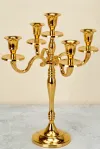
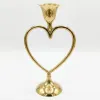
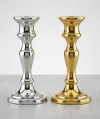
This technique allows manufacturers to create highly detailed brass sculptures, figurines, candle holders, animal statues, religious products, and luxury decorative accessories with exceptional precision.
The chosen casting process depends on the final product's design requirements, production quantity, and customer specifications.